
When beginning your OTA education, it’s important to choose an accredited OTA program. Accreditation ensures that the program meets an acceptable academic standard. The best OTA programs, however, have experienced faculty, student resources, fieldwork partners, positive outcomes, and modern facilities to support students’ education.

If you’re exploring healthcare careers that combine compassion, creativity, and hands-on patient care, occupational therapy assistant (OTA) programs may already be on your radar. OTAs work alongside occupational therapists to help patients build, regain, or improve the skills needed for daily living after illness, injury, or disability.
St. Catherine University’s online OTA program is an accredited, hybrid program that grants an associate degree through an 80% online and 20% in-person curriculum. Our accreditation ensures that we are educating students with the latest OTA standards and practices.
The right program can prepare you for licensure, strengthen your clinical confidence, and help position you for long-term career success. Whether you’re just beginning your search or narrowing your options, here’s what to evaluate before applying to occupational therapy assistant programs.
ACOTE Accreditation: The Non-Negotiable Standard for OTA Programs
When researching accredited OTA programs, accreditation should be the first thing you check for. Specifically, look for programs accredited by the Accreditation Council for Occupational Therapy Education (ACOTE).
ACOTE accreditation matters because it confirms that a program meets established educational standards for preparing future OTAs. Without graduating from an ACOTE-accredited program, students typically cannot sit for the National Board for Certification in Occupational Therapy (NBCOT) exam, which is required for licensure in most states.
Attending an accredited program also helps ensure you receive:
- Curriculum aligned with industry standards
- Eligibility for financial aid opportunities
- Evidence-based instruction
- Qualified faculty support
- Structured fieldwork experiences
Before applying, verify a school’s accreditation status directly through ACOTE or the institution’s website. You can find St. Kate’s accreditation details on our site, verifying our institutional accreditation with the Higher Learning Commission and program accreditation through ACOTE. Accreditation should never be treated as optional, it’s foundational to your future career.

Uncover the complete guide on how to become an occupational therapy assistant.
What Defines the Best Occupational Therapy Assistant Schools?
Many students search for the best occupational therapy assistant schools, but “best” can mean different things depending on your goals and lifestyle.
A strong OTA program typically offers a combination of academic quality, student support, hands-on training, and career preparation. As you compare schools, consider these factors.
Experienced Faculty
Faculty members with clinical experience can offer practical insights beyond the textbooks. Instructors who have worked in rehabilitation hospitals or pediatric clinics often bring valuable real-world perspectives into the classroom.
Student Support Services
Tutoring, academic advising, career counseling, and mental health resources can significantly impact your educational experience. Support systems become especially important in online or hybrid healthcare programs.
St. Kate’s supports students at every step of their OTA education, providing group or one-on-one NBCOT prep coaching, along with career development, tutoring, study assistance, and other student resources.
Modern Learning Environments
Look for learning sites with updated labs, simulation spaces, and healthcare technology that mirror real-world settings.
Strong Student Outcomes
High graduation rates, strong NBCOT pass rates, and successful job placement outcomes can indicate program effectiveness.
Fieldwork Setting Partnerships
Programs with local connections through hospitals, rehabilitation centers, schools, and outpatient clinics may offer broader fieldwork opportunities and networking opportunities.
The best occupational therapy assistant schools help students feel prepared both academically and professionally.
OTA Program Curriculum: What You’ll Learn
Occupational therapy assistant programs combine classroom instruction with practical clinical learning. Coursework is designed to build both technical knowledge and interpersonal skills.
While curriculum details vary by school, St. Kate’s OTA curriculum includes subjects such as:
- Foundations of Human Occupation
- Pediatric Practice
- Primary Care and OT
- Professional Growth and Community Engagement
- Psychosocial Approaches
- Rehabilitation Practice
- Role of the OTA
Students also learn how occupational therapy supports individuals across the lifespan, from children with developmental challenges to older adults recovering from strokes or surgeries.
In addition to clinical knowledge, OTA students develop essential soft skills like communication, empathy, teamwork, and problem-solving.
Because occupational therapy is highly client-centered, successful students learn to adapt interventions to each client’s individual needs and goals.
Skills Labs: Hands-On Training That Builds Confidence
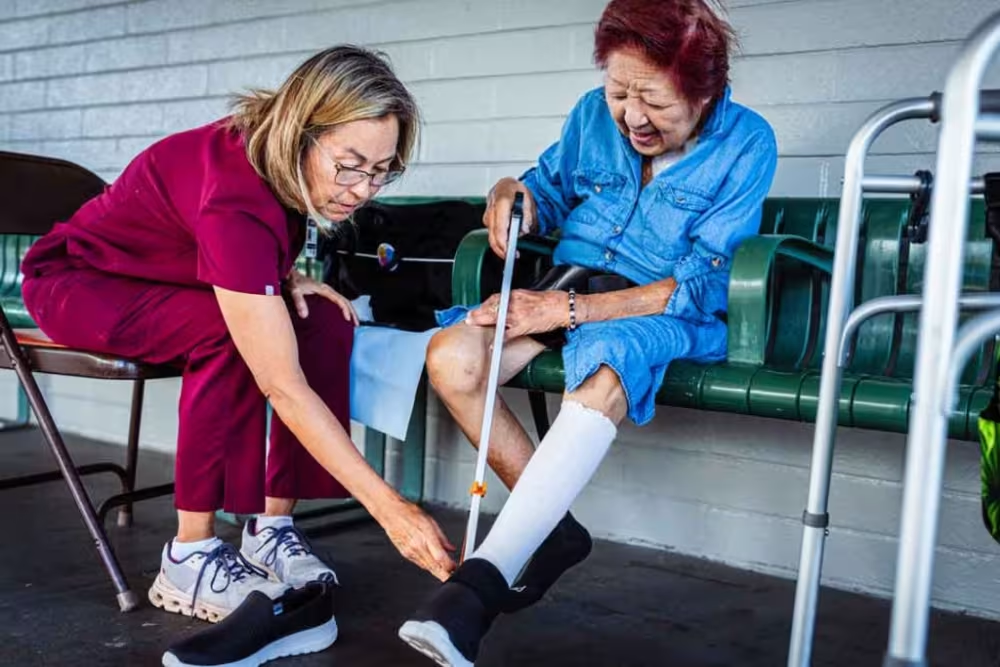
One of the most valuable aspects of many OTA programs is the opportunity to practice skills in a controlled learning environment before entering real-world settings.
OTA skills labs allow students to apply what they learn in class through guided hands-on experiences. These labs may include:
- Activities of daily living (ADL) simulations
- Adaptive equipment instruction
- Intervention implementation
- Patient assessment
- Patient communication
- Progress monitoring
Simulation-based learning helps bridge the gap between theory and patient care. Students can practice interventions, make mistakes safely, and receive immediate instructor feedback.
For many learners, hands-on practice builds confidence and reduces anxiety before fieldwork placements begin.
When comparing occupational therapy assistant programs, ask how frequently students participate in labs and what technologies or simulation tools are available. At St. Kate’s, for example, OTA students complete a series of 12 skills labs over six weekends, with a 12:1 student-to-instructor ratio to facilitate personalized instruction.
Fieldwork Education: Real-World Experience Before Graduation
Fieldwork is one of the most critical components of OTA education. Through supervised clinical experiences, students gain exposure to real patients or clients, occupational therapy teams, and workplace environments.
Most accredited OTA programs include two levels of fieldwork:
Level I Fieldwork
These introductory experiences help students observe occupational therapy services and begin developing professional behaviors.
Level II Fieldwork
These immersive clinical rotations provide more advanced, hands-on patient care experiences under supervision.
At St. Kate’s, OTA fieldwork settings may include:
- Hospitals
- Mental health facilities
- Outpatient centers
- Schools
- Nursing homes
Strong fieldwork experiences help students develop clinical reasoning, communication skills, and professional confidence. They may also lead to networking opportunities or future employment connections after graduation.

Program Delivery Formats: Finding the Right Fit for Your Life
Today’s OTA programs may offer multiple learning formats to accommodate diverse student needs.
On-Campus Programs
Traditional campus-based programs provide face-to-face instruction, direct faculty interaction, and frequent hands-on lab experiences.
Hybrid OTA Programs
Hybrid programs, like St. Kate’s online OTA program, combine online coursework with scheduled in-person labs and clinical requirements. These programs can offer greater flexibility for working students or those balancing family responsibilities.
When evaluating format options, consider:
- Availability for in-person labs and fieldwork
- Commute time
- Family obligations
- Technology requirements
- Work schedule
- Your learning style
The best program format is one that supports your success while realistically fitting into your lifestyle.
Campus Locations and Fieldwork Access
Choosing a school near strong healthcare networks can improve access to clinical experiences and professional connections. Your own lifestyle, however, also plays a role in the decision. Some students prioritize staying close to family support systems, while others are willing to relocate for programs with stronger clinical opportunities.
When evaluating program locations, think about:
- Availability of fieldwork sites
- Cost of living
- Distance from home
- Local healthcare partnerships
- State licensure requirements
- Transportation access
If you’re considering hybrid or partially online OTA programs, remember that fieldwork and lab requirements will still require in-person participation. St. Kate’s has learning centers in California, Texas, Minnesota, and Virginia, as well as connections with fieldwork locations across the U.S.
Tuition and Financial Aid: Understanding the Investment
Like many healthcare education pathways, OTA programs require financial planning. While affordability matters, students should also evaluate overall value, not simply the lowest tuition rate.
Financial aid options may include:
- Federal student aid
- Grants
- Institutional aid
- Payment plans
- Military and veteran aid
Some employers and healthcare organizations also offer tuition assistance programs for students pursuing healthcare careers.
Before applying, speak with admissions or financial aid counselors to understand the program tuition and fees and available assistance resources.

Consider where your OT license can take you with the OT compact license explained.
Outcomes and Licensure: Measuring OTA Program Success
One of the best ways to evaluate accredited OTA programs is by reviewing student outcomes.
Strong programs are transparent about key performance indicators, including:
- Employment outcomes
- Graduation rates
- NBCOT exam pass rates
The NBCOT exam is particularly important because passing it is typically required for licensure and employment as a Certified Occupational Therapy Assistant (COTA). Programs with consistently high exam pass rates may indicate strong academic preparation and student support systems.
You should also research state licensure requirements where you plan to work, as regulations can vary slightly by location.
Ultimately, successful outcomes reflect how effectively a program prepares students for professional practice.
Choosing an Accredited OTA Program That Sets You Up for Success
As you compare OTA programs, it can help to organize your research using a checklist or side-by-side comparison.
Important questions to ask may include:
- Is the program ACOTE-accredited?
- How long will the program take to complete?
- On-campus, hybrid, or accelerated?
- Are placements arranged for students?
- What is the total estimated cost?
- Are tutoring and advising available?
- Can the schedule work with your lifestyle?
- Will you receive individualized attention?
The “right” program will depend on your career goals, finances, schedule, and preferred learning environment.

Pick St. Kate’s for Your OTA Education
Choosing among accredited OTA programs is a major decision, but it’s also an exciting step toward a meaningful healthcare career. A well-chosen OTA program can open the door to a rewarding career dedicated to helping others regain independence and improve quality of life every day. Choosing St. Kate’s online OTA program offers you a customizable curriculum that can be completed in as few as 16 months. Plus, with three start dates per year, you don’t have to wait to get started, with the minimum admission requirement being a high school diploma.
Request information and connect with an admissions counselor to start your online OTA education.

